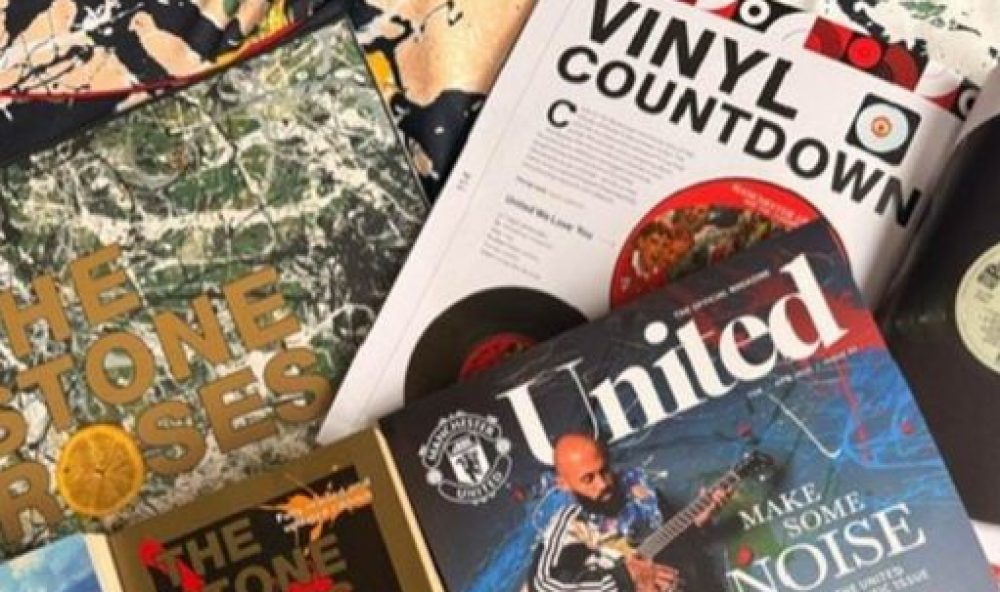
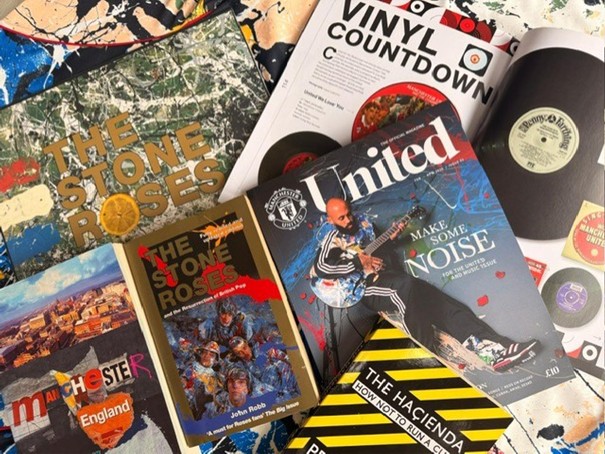
As a life-long Manchester United fan and season ticket holder something about the club’s recently relaunched magazine troubles me. It’s not the Reds’ lurching efforts to make the Champions league because, after so many years of consistent inconsistency, I’m practically immune to match day disappointments. What’s more, there’s very little current pitch performance information in the magazine because, as the editorial explains, each quarterly edition is now focused through a unifying theme with issue 01 concentrating on music. Nothing wrong with that and there’s plenty of relevant content to chew over including the release of United’s new Stone Roses x Adidas clubwear range, which kicks off the first five double pages with a glossy array of photographs featuring players from both the men’s and women’s first team squads. Sporting paint splattered tracksuits, football tops, bucket hats and I wanna be adoRED T-shirts they look influencer sharp. But why, I keep asking does the front cover feature Bryan Mbuemo leisurely strumming a guitar? I know it shouldn’t matter because Bryan is our star forward, elegantly bald, beautifully bearded and brilliant in front of goal but the man actually plays piano. A nit-picking niggle, I guess you’d say and to be fair, the United magazine did spark a growing fascination with the relationship between Manchester’s music scene and a fantastic football heritage which cuts across both red and blue halves of the city. So, let’s just roll with it.
In his latest book, “Live Forever” about the rise, fall and resurrection of Mancunian rock giants, Oasis, music journalist John Robb describes how the Gallagher brothers were “infused with the twin godheads of Manchester culture – football and rock n’ roll…” John was the first journalist to document the Stone Roses’ story, he still fronts two great bands, Goldblade and The Membranes, and when the media want an inside scoop on Manchester, music and everything from the city’s recent staging of the Brit awards to cheeky name-checks for aspiring acts, John’s the guy they call. So, I set up a call too and true to form, he seems happy to machine gun his way through a riveting account of Manchester’s unique blend of music and football which has spawned a global brand influencing architecture, fashion and cultural style.
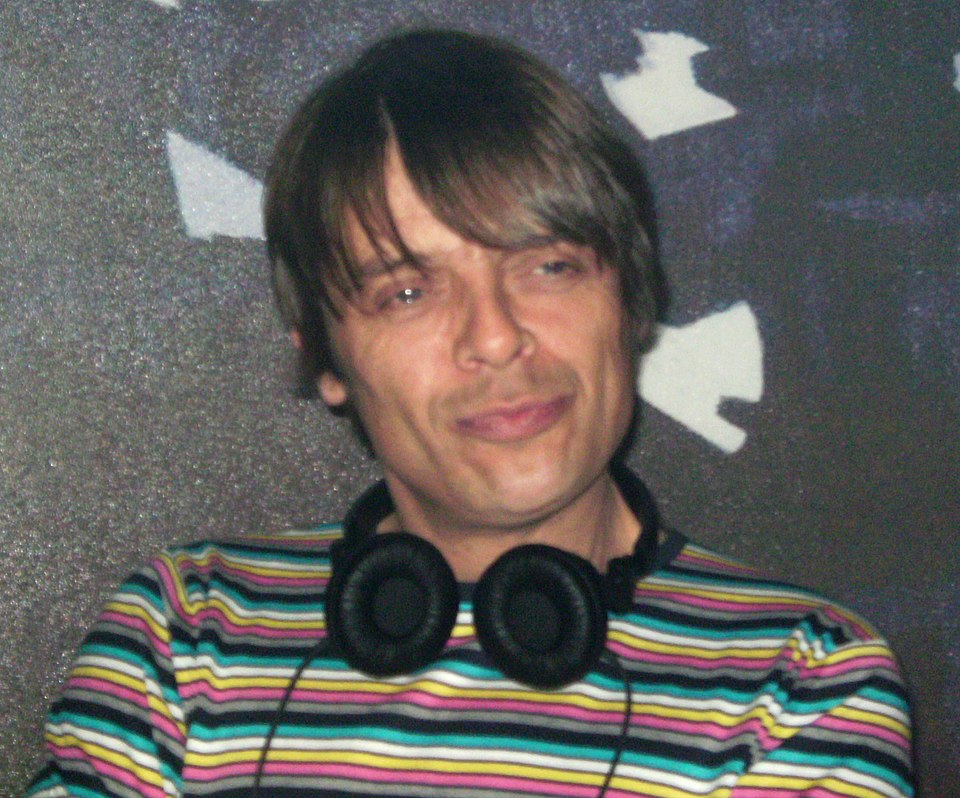
John cuts a striking figure. Speaking to me from his living room on a mobile, his face fills most of my screen; whole head shaved apart from the signature mohawk tuft of now greying hair He is very chilled and reacts with spontaneous enthusiasm to questions.
First off, I ask him where and when he felt football and music really became intermeshed forces in Manchester. He immediately starts to talk about how that was not always the case and uses sixties Merseyside to point out that although songs like Gerry and the Pacemakers’ “Walk On” may have found a spiritual home on the Kop, it was a time when nobody really cared about which team pop stars like Cilla Black or the Beatles supported. He emphasises that the famous Sex Pistols gig in 1976 was the real catalyst for Manchester’s music revolution but even at that point nobody was inspired in same way by football. “It just seemed like dead, dead you know. It was played by people with perms and moustaches, a pretty different culture. They (the players) still had flares and we didn’t. They seemed like people from the other side of the world. Look at the photos of seventies footballers. They’ve all got comb overs and mad hair…like ancient people trying to be trendy……not like George Best who was super cool, ahead of his time and probably the most amazing player I’ve ever seen.”
John talks so rapidly, I find it difficult to pick up on his key ideas as he whizzes through the decades until he homes in on the mid eighties and I start to see the light.
“It gave the city the confidence to recreate itself as a city that fitted its soundtrack…
John Robb:
Music was on the cultural front-line and football wasn’t. Football did make people in the city feel good but it didn’t really empower them like music, what the city was or what it thought of itself. With music you can see the whole regeneration of Manchester. In a sense it starts with the Sex Pistols, then the punk and post punk scene, acid house and then the whole story…..It empowered Manchester. It gave Manchester a kind of modern identity, not this identity of being old, falling apart, post-industrial. It gave the city the confidence to recreate itself as a city that fitted its soundtrack.
But gradually, in increments, you get a cross over and for me it starts with terrace culture. The people on the terraces started to wear cooler clothes. It’s the kids coming out, punk, post punk two tone, what ever…..all the indie bands did these kind of weird little cross overs. So initially they were hip student bands and suddenly became football terrace bands. It seemed really unlikely that the Smiths would go from being a trendy arts student type of band to being a football terrace kind of band and when the Mondays and the Roses came along they changed the style and look; like the people who buy the records and go to the football and listen to the music. And I think Acid House is the fulcrum, innit? This is where the whole thing gets combined, sartorially, musically, culturally into one thing so that the lines are very blurred between football, music and the city itself. You know what the city thinks of itself. What the city thinks it should look like,,,,,and it’s all coming from those different areas.
They were an era defining band. There was before the Stone Roses and after the Stone Roses…
Finn Turton:
You’ve lived through multiple eras of Manchester’s cultural development with music and football. What feels different now compared to the nineties when the two were becoming a major force, obviously with the Stone Roses and Oasis and what feels the same?
John Robb:
Well, I think football became much more pop culture…and footballers themselves, like David Beckham and Eric Cantona, became like pop culture icons… Because Eric Cantona, when he put his collar up really reflected the vibe of the city…….He kind of looked like Manchester to me…..He was in Manchester in that late eighties period, he really fitted that period…..he wasn’t at the raves or anything but his defiant, rebellious attitude was very Manchester.
Finn Turton:
I think there’s a big correlation between the number seven and United……with your David Beckham’s, Cantona, your Ronaldos and Best like you mentioned earlier. They do become icons of the city. And touching on icons of the city and sorry to bring it up, because it was two very unsettling moments in Manchester’s history recently, the funerals of Mani and Ricky Hatton. What did those funerals reveal to you about Manchester’s relationship with its cultural heroes?
John Robb:
Hatton’s interesting, a different sport, boxing, you know but he was part of the scene, part of the family, really. I suppose he knew a lot of musicians, and he knew all of the footballers. I mean, Manchester has always been a city where all different sorts of worlds overlap…..but at the same time everyone’s in the same place, people are seeing the same gigs, in the same bars, on the same streets and I thinks that’s one of the great assets in the city. And Ricky Hatton was very much like that. He was part of the city, he wasn’t floating above it or on the outside of it.
And the same with Mani as well. Mani was always everywhere. You’d always see him around and I think so many of the best tributes to Mani are not people talking about him being the Stone Roses famous bass player but talking about the bloke they bumped into at the greengrocer’s the week before. He was a really good laugh, you know. Mani was also iconic for being a master Manchester United fan. And that United shirt they produced just after he died with Manichester on the back of it, that was really funny. Mani went across the whole city. I think he reflected the city back to itself. He was typically Manchester. Loved his music and playing in one of the most iconic bands ever to come out of the city and supported Manchester United with a passion that any football fan can relate to. Even City fans understood the passion he had for his club. So Mani was sort of local and universal; international, continental as Ian Brown once said, yeah?
Finn Turton:
The city responding collectively to figures like Mani and Ricky Hatton because of their stratospheric importance in terms of football, music and a sort of everyman relationship with people?
John Robb:
Manchester defines itself with music and football. I think they’re the two key pillars. I think London’s defined by money and careers and Manchester’s football and pop culture. And Mani was the classic everyman. He looked like a typical Manc, he was into the same things as everybody else, and even if people had never met him, they would feel like they knew him or somebody like him. That’s why there was such an outpouring when he died. I think people felt like they’d lost a cousin or a part of themselves.
Finn Turton:
Do you think these deaths feel like the end of an era or a reminder that culturally it’s all still staying alive?
John Robb:
When you saw the Roses, the three of them, carrying Mani’s coffin in the church, that felt like the end of an era, you know, because that was the end of the Stone Roses……you know, there’d been famously fractious relationships between some of the members but there they were, all together for one last time, as the four of them….and I was thinking that’s it, that’s the end of a period….it’s nearly forty years ago since the Roses broke through but they’ve had such an amazing, powerful, cultural impact. They were an era defining band. You know there was before the Stone Roses and after the Stone Roses…..
Finn Turton
Talking now about Oasis and The Stone Roses, how organic were their relationships with the clubs they supported?
John Robb:
The Roses support for Manchester United, well three of them, is a key part of their story. When they broke through they were going to the games, part of that terrace culture, formulating their own version of that culture.
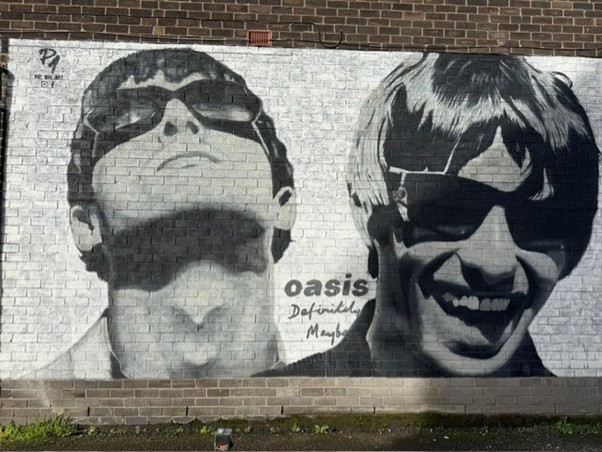
And with Oasis, Noel and Liam, they took that equation to the max, you know because they’re as famous for supporting City as they are for being Oasis. When they came through they seemed like the underdog band supporting the underdog club that was definitely in the shadow of United for a long time. And they ended up being the biggest band in the country and last year, the biggest band in the world. And weirdly, City kind of run parallel to them. Winning all those championships and everything. And Noel is still going to the matches. He doesn’t sit VIP, he’s in the stands…
Even though he’s not lived in the city for a long time and has made such a lot of money, he’s still typically Mancunian….with that piss taking kind of attitude. Winding people up but not completely serious. Other people move away and they change, which is fine but he’s still very versed in the city’s culture.
Finn Turton:
Obviously, you know Oasis got bigger, the Stone Roses and the city’s cultural identity did get commodified a bit, especially over the last 10 years. I’ve noticed it a lot as a young person, seeing more young people getting into that Manchester music scene and wondered if that’s a bad thing or are whether there are positives to that shift?
John Robb:
A good thing, I think. That was always the thing about Manchester, balance. Always wanting to be in the mainstream but on its own terms. Never watered down and people had to come with them. So I don’t see any problem at all and I think the city has expanded now to reflect that. It’s become a self fulfilling prophecy in a way. The city’s also like a Manchester band, it’s become one of the biggest cities in Europe, it definitely punches above its weight and I think that’s supercharged by the music and the football. Wherever you go in the world people have heard of Manchester, you know, huge in China because of the football but once you get under that bonnet, music culture is the one that defines the city. Music gives it the style, the attitude, the empowerment.
You could argue that the whole skyline as well, the way the city looks now, for me it’s like the Hacienda…..it was club built in Manchester, and it was so big because it was 1500 capacity which was big at the time. There weren’t 1500 people who went to anything alternative at that time but the Hacienda was like a New York style, super hip, futuristic nightclub built in a city full of old decaying mills and at the time it was built people went mental. Ain’t never gonna’ work but you know, even though the Hacienda isn’t there anymore the whole city actually looks like the Hacienda. You know, that would be an interesting feature to work on wouldn’t it?
It certainly would I’m thinking and as John continues to reflect on the way football and music culture have helped to shape Manchester, from the bottom up, with underdog swagger and and a sense of self determination, I realise what’s irritating me about United’s Mbuemo cover. From a terraces perspective, it just feels a bit too top down.